


The Tenor Who Plays Tenor Returns
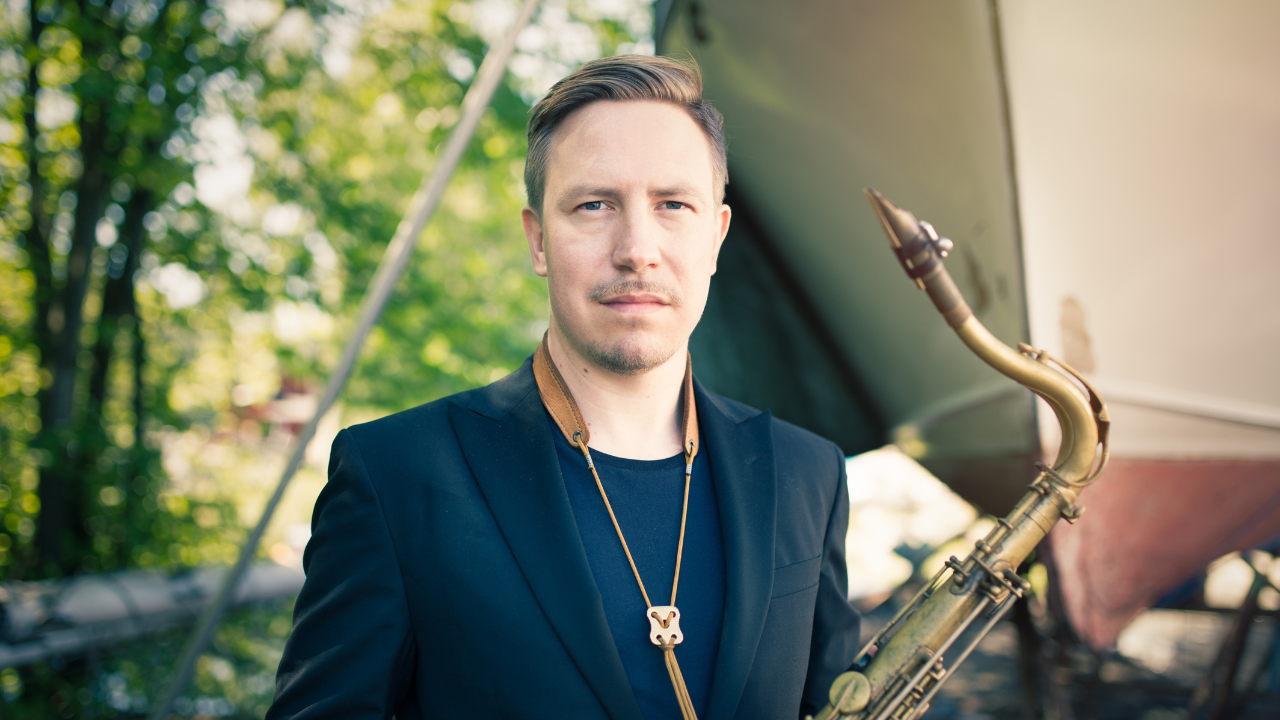
Norwegian musician Håkon Kornstad
One of the world’s most remarkable musicians returns to the U.S. this April, with performances that include his debuts in Minneapolis at Mindekirken, in San Francisco at SFJazz, and at the University of California, Davis in the Mondavi Center for the Performing Arts.
Known for his restless creative spirit, Norwegian saxophonist Håkon Kornstad had already reached the pinnacle of the Scandinavian jazz scene when he fell in love with opera during a night at the Metropolitan Opera – a performance he had nearly decided not to attend. At the age of 32, he enrolled at the Oslo Academy of Opera becoming, as he likes to point out, its oldest student to date. He graduated in 2014 and soon began appearing in professional opera productions in Norway.
His love of opera grew partly out of a feeling that so called modern jazz was no longer so modern after all. He needed a fresh supply of melodies and ideas. At the same time, he discovered how much he loved to sing, immersing himself in old recordings of legendary tenors and reaching back into a seemingly forgotten world in search of new musical inspiration.
“Rather than full operatic arias, which can be too dramatic for this environment, I work with stretched citations and lyrical excerpts from composers such as Tosti, Respighi, Gluck, and Purcell. The Nordic song tradition is equally central, with music by Grieg and Sibelius, alongside Nordic hymns and sacred songs.” Håkon Kornstad
Yet when one discovers something new that resonates so deeply, it is easy to forget what you already carry with you. While waiting in a corridor for a rehearsal during his operatic studies, he heard one of his piano coaches improvising in a nearby studio, inspired by Keith Jarrett. In that moment, he realized how much he missed jazz. He decided then and there to create a project that would bring his two worlds together.
Classical lieder and opera would provide the melodic material, while jazz improvisation would extend the most beautiful moments and bind everything into a single musical language. He tried it – and it felt magical. The walls between two lyrical realms seemed to fall, brought together through his fearless imagination and extraordinary instrumental and vocal talent. In the truest sense, his work is avant-garde, even when it is lyrical, sweet, or melancholic.
In 2007, he recorded the first of his acclaimed solo albums, Single Engine, followed by Dwell Time in 2009, which earned him a nomination for a Norwegian Grammy and brought further international critical acclaim. It was on his third album, Symphonies in My Head (2011) – recorded during his first year at the opera academy – that the seeds of what was to come became evident, particularly in his instrumental interpretation of an aria from Georges Bizet’s opera Les pêcheurs de perles.
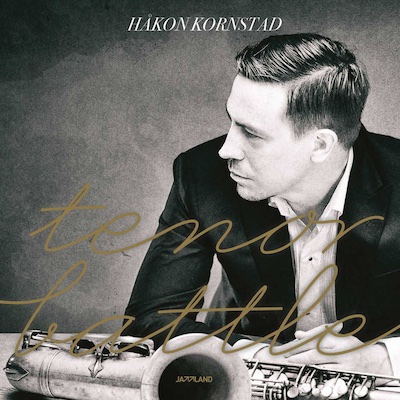
Kornstad's new direction, a meeting of jazz and opera, manifest itself not only in his solo performances, but also took the form of a new ensemble which he named Tenor Battle, a reference to the classic tenor saxophone “battles” among American jazz musicians in the 1940's and 50's. In Kornstad's version, the “battle” refers to him singing tenor and playing tenor saxophone in the same group. Seamlessly blending opera arias and jazz, his group featured his longtime companion, double bassist Per Zanussi from Kornstad’s earlier group Wibutee, as well as harmonium player Sigbjørn Apeland, percussionist Øyvind Skarbø, and cembalo player Lars Henrik Johansen. Their music was released in the 2015 album Tenor Battle.
In the winter of 2020, Kornstad planned to release a compilation from his three solo albums on vinyl, but then got the idea to record new material at Sofienberg Church. Just days after recording, the world went into pandemic lockdown and, with more time on his hands than usual, he mixed and edited the new solo album Out of the Loop (2020).
Kornstad comes to the Mondavi Center for three nights in Vanderhoef Studio Theatre on Thursday, April 23 through Saturday, April 25. Visit the event page for tickets.
My solo performances combine solo saxophone improvisation with extended techniques such as multiphonics and slap tongue, approached not as effects but as melodic and expressive tools. The music unfolds with an elegiac, romantic, and often melancholic character. Sound layers are gently built using an intentionally outdated looping device, used solely to support and vary the improvisation rather than to foreground technology. On top of these textures, the voice enters as a kind of remembered sound – fragments drawn from the golden age of classical singing."Håkon Kornstad